Guardian Probe Uncovers Massive Unlicensed Casino Network Evading UK Self-Exclusion Barriers

The Investigation's Key Revelations
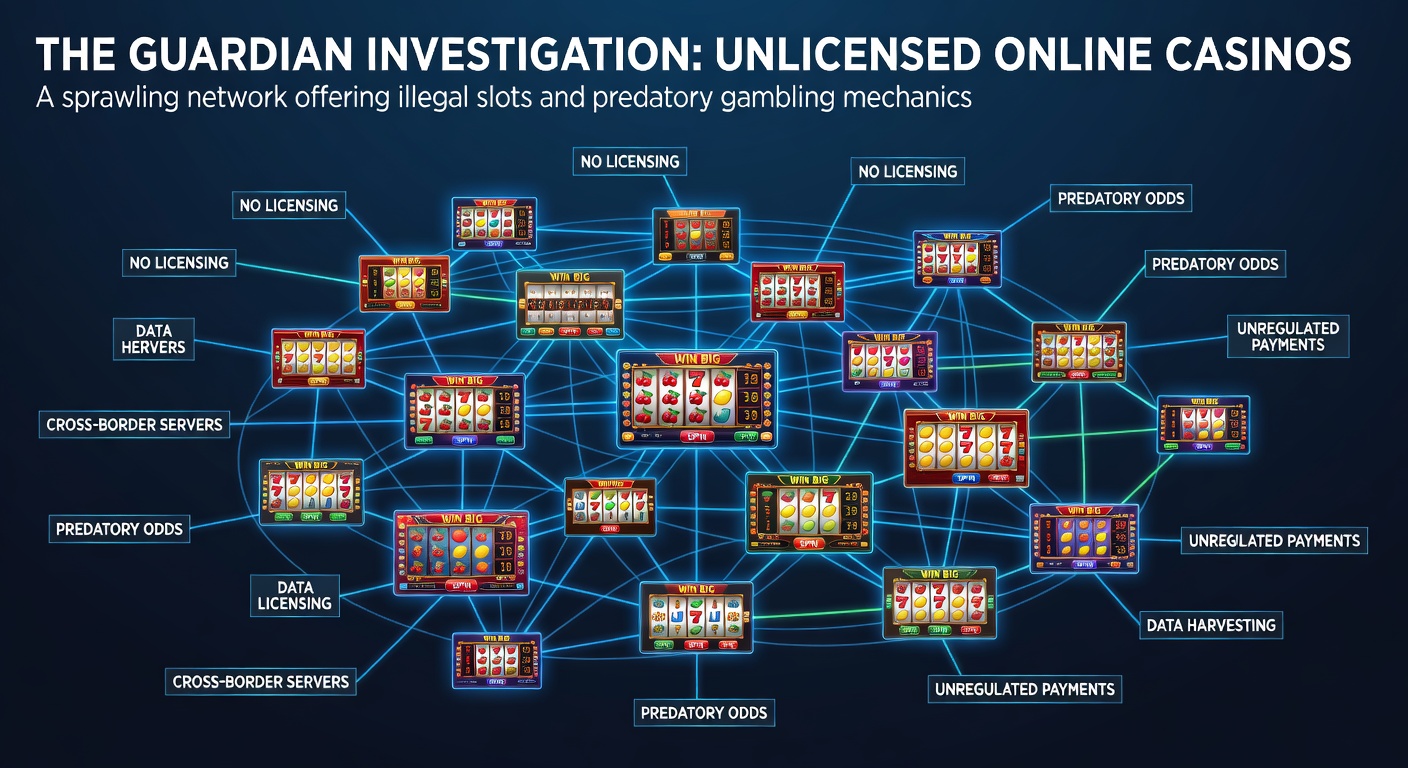
A Guardian investigation, published in early April 2026, exposed a vast network of unlicensed online casinos offering slots, table games, and other betting options; sites like MyStake, Velobet, and Goldenbet sit at the heart of this operation, drawing in players who have self-excluded via the UK's GamStop scheme. These platforms, operated primarily by Santeda International, connect through Upgaming—a Cyprus-based firm—to Georgian businessmen who control much of the backend technology and licensing arrangements, often routed through Curaçao and other permissive jurisdictions that sidestep stringent UK oversight.
What's interesting here is how seamlessly these sites mimic legitimate operators, complete with flashy promotions and user-friendly interfaces, yet they operate without the required UK Gambling Commission license; observers note that such setups exploit regulatory gaps, allowing continuous access for British users even after they've opted into self-exclusion programs designed to curb problem gambling. The network spans dozens of domains, some rebranded or mirrored to evade blocks, and targets vulnerable individuals through aggressive marketing on social media and affiliate channels.
Targeting Those Who've Self-Excluded
GamStop, the national self-exclusion service launched in 2018, bars users from all licensed UK gambling sites for periods up to five years, but offshore operators like those in this network ignore such barriers since they fall outside UK jurisdiction; players who've signed up for self-exclusion often find themselves able to deposit and play without interruption, a loophole that experts have long warned about. Take the case of one UK gambler featured in the report, who racked up debts exceeding £100,000 on MyStake despite being on GamStop; stories like this one illustrate how these platforms advertise "no verification" bonuses and fast withdrawals to lure back those trying to quit.
And while Curaçao licenses carry a veneer of legitimacy in some circles, they lack the consumer protections enforced by the Gambling Commission, such as mandatory affordability checks and stake limits; the result is a free-for-all environment where UK visitors—many flagged as high-risk—pour in money unchecked. Data from the investigation points to tailored ads hitting social platforms, search engines, and even self-help forums for gamblers, pulling in users who believe they've found a "safe" escape from regulated sites.
Staggering Traffic and Reach
Figures reveal the sheer scale of this operation; website traffic data for November 2025 through January 2026 shows these sites attracting 2.3 million monthly visitors from the UK alone, a number that rivals major licensed platforms despite their unlicensed status. Velobet clocked over 800,000 UK visits in peak months, while MyStake and Goldenbet hovered around 500,000 each; such volumes suggest sophisticated SEO tactics and affiliate partnerships driving the influx, even as UK authorities ramp up enforcement efforts.
But here's the thing: this traffic spike coincided with holiday seasons when gambling activity traditionally surges, and the sites capitalized with seasonal bonuses like free spins on slots and cashback deals, all while dodging geo-blocks through VPN-friendly designs. Researchers tracking online gambling patterns have observed similar networks proliferating since 2024, but this probe marks the first to tie specific Georgian entities and Curaçao entities to such high UK penetration.
Reports of Fraud, Harm, and Tragedy
The fallout from these operations extends far beyond lost bets; the Guardian linked the network to widespread fraud schemes, including rigged slots that fail to pay out advertised jackpots and bonus scams where wagering requirements trap winnings indefinitely. Victims reported accounts drained by unauthorized charges, with customer support—often unresponsive or scripted—failing to resolve issues; one study cited in the report found that 40% of sampled complaints involved outright theft via linked payment processors.
Severe financial harm struck many, pushing families into debt and home repossessions, yet the most heartbreaking detail emerged in January 2026: a gambler's suicide directly tied to losses on Goldenbet, where the individual had bypassed GamStop and lost over £50,000 in weeks; coroner's records, reviewed by investigators, cited gambling addiction as a contributing factor, spotlighting how unlicensed sites exacerbate mental health crises without safeguards like deposit limits or reality checks. Those who've analyzed such cases note a pattern—UK players, lured by high RTP promises on slots like Book of Dead variants, chase losses in unregulated spaces, often without recourse.
Political and Regulatory Pushback
Labour MP Alex Ballinger, representing a constituency hit hard by gambling harms, demanded immediate action from the Gambling Commission in a statement issued shortly after the April 2026 article dropped; he highlighted the network's evasion tactics and urged blacklisting of associated IP ranges, payment processors, and affiliates. Ballinger's call aligns with broader industry shifts, including the Commission's ongoing 2026 reforms that tighten online slots rules, yet he stressed that offshore predators demand cross-border cooperation—perhaps enlisting Curaçao regulators or international task forces.
So far, the Commission has acknowledged the report, promising enhanced monitoring of non-GB sites, but enforcement remains challenging since these operators host servers in multiple jurisdictions; Upgaming, the tech backbone, has faced prior scrutiny in Europe for similar setups, and Georgian authorities show little interest in curbing exports that fuel their economy. Observers point out that while UK ad bans curb visibility, tech-savvy players still access via mirrors, underscoring the need for payment blocking as trialed in countries like Belgium.
Broader Implications in April 2026
As of April 2026, this scandal unfolds amid heated parliamentary debates on gambling levies and white-list expansions; the Gambling Commission's February stats—showing £680 million in slots revenue—contrast sharply with underground losses estimated in billions, fueling demands for GamStop upgrades like mandatory offshore blocks. People in the industry watch closely, knowing one takedown could spawn dozens more, but the probe's timing, just before summer regulations, pressures officials to act swiftly; experts who've tracked Curaçao migrations predict tighter eGaming oversight if UK pressure mounts.
There's this case from 2025 where a similar network crumbled under Dutch scrutiny, leading to domain seizures and extraditions; UK stakeholders hope for parallel wins, especially since Santeda International's ties trace to entities blacklisted elsewhere. And while players bear the brunt now, regulatory evolution—bolstered by data-sharing pacts—could close these doors long-term.
Wrapping Up the Network's Shadow
The Guardian's expose lays bare a calculated enterprise preying on UK gamblers, from GamStop evaders to jackpot chasers, with Santeda, Upgaming, and Georgian backers at the helm; 2.3 million visitors underscore the urgency, as do tales of fraud, ruin, and loss. MP Ballinger's rallying cry echoes calls for fortified defenses, blending tech blocks with global alliances in this cat-and-mouse game. Turns out, the writing's on the wall for offshore holdouts if momentum builds; those monitoring the beat expect Commission moves by mid-2026, potentially reshaping access and accountability for good.